Sub Flows
Last updated: April 13, 2025
The Sub Flow step allows you to embed one flow inside another—giving you a powerful way to organize complex logic, re-use shared sequences, and analyze performance at a deeper level.
When added to a parent flow, the Sub Flow functions like a full flow of its own: you can build it out with any message or control steps, edit it separately, and track results independently. Sub flows support all step types and can include their own delays, segments, experiments, and message logic.
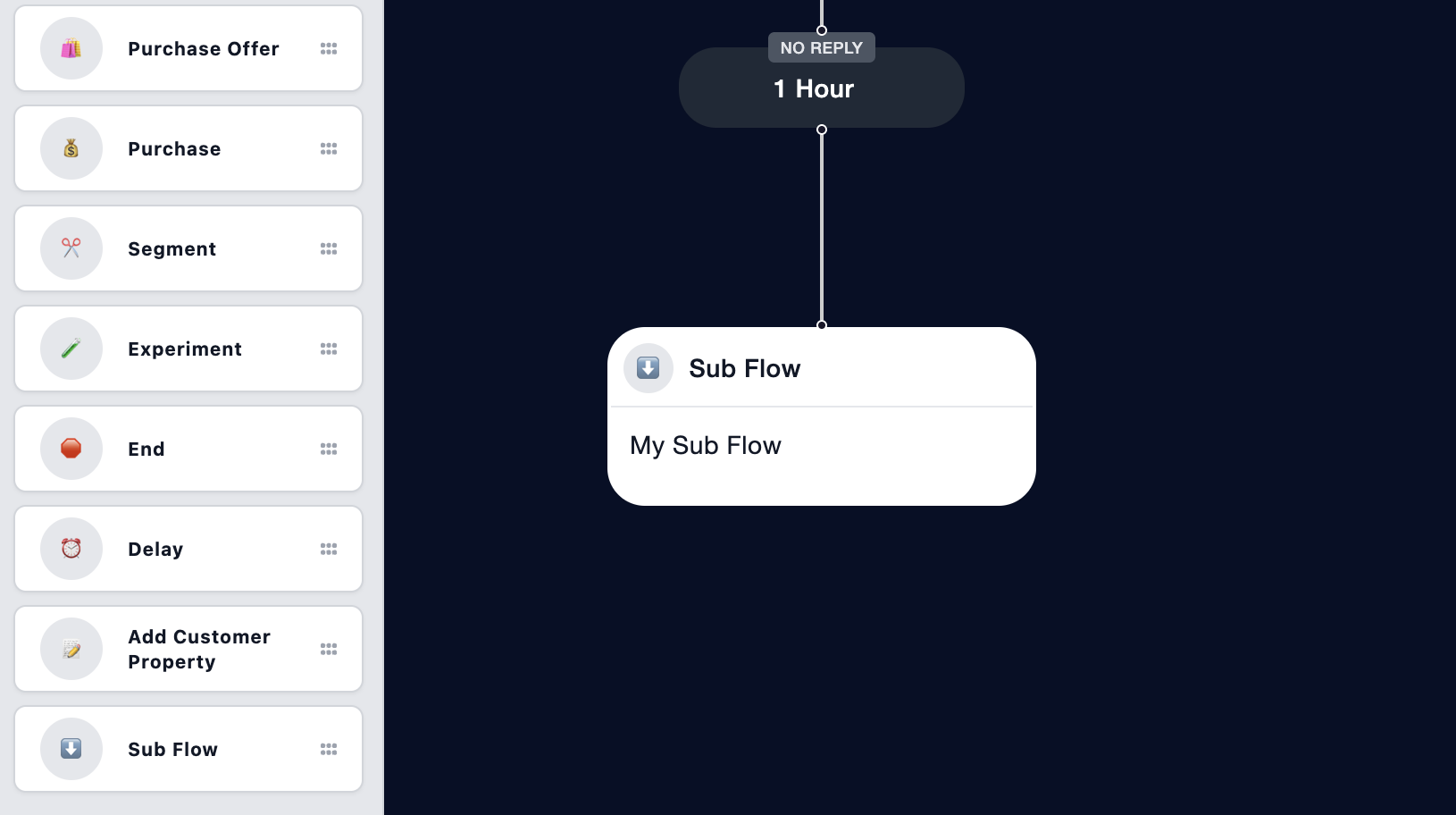
When a customer reaches a sub flow, they complete it before returning to the main flow (if applicable), or exit the journey if the sub flow ends.
Why Use Sub Flows?
Simplify complex flows: Move repeated branches or logic blocks into a dedicated Sub Flow to keep your main flow cleaner and easier to manage.
Improve reusability: Use the same Sub Flow in multiple journeys (e.g., a VIP follow-up sequence or a refill prompt).
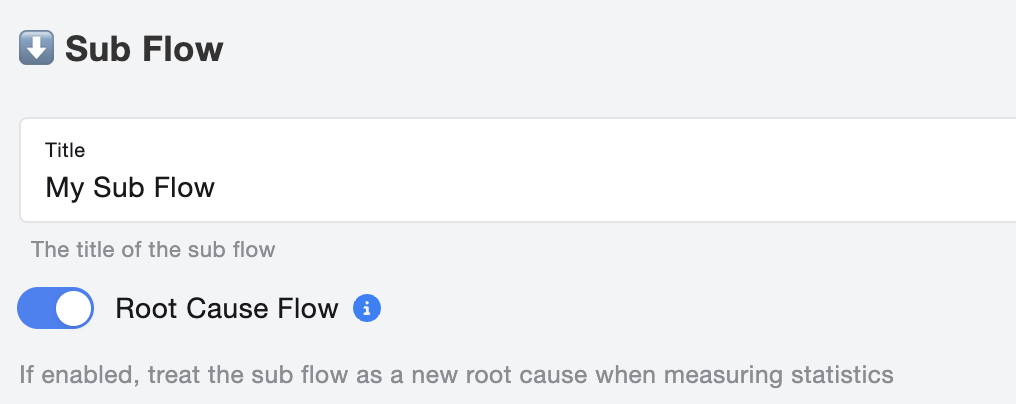
Enable deeper tracking: Sub Flow performance is tracked separately, so you can evaluate how each piece of your automation performs over time.
Best practice:
Use the Sub Flow step when building modular journeys, running complex multi-phase flows, or creating shared building blocks like recovery sequences, reminders, or loyalty messaging.